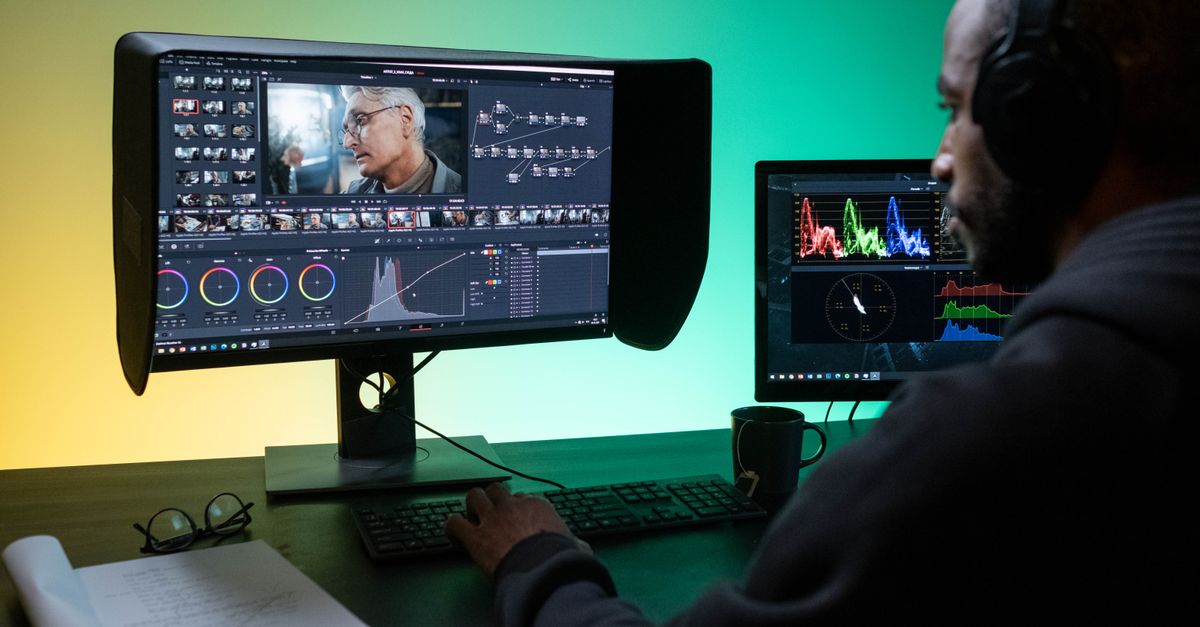
How to reverse-engineer competitor ads: manual teardowns vs AI agents

When growth teams spot a competitor's winning paid social creative, copying the exact script and swapping logos reliably drives up customer acquisition costs. This decision guide breaks down whether performance marketers should reverse-engineer competitor ads through manual spreadsheet teardowns or automate the pipeline using Notch. By extracting the underlying hook archetypes, pacing, and persuasion mechanisms rather than superficial visual assets, brands can rebuild proven creative structures for their own product catalog. For teams managing high-spend campaigns on Meta and TikTok in 2026, transitioning to agentic ad cloning produces publish-ready variants in minutes while preserving unit economics.
The noise trap in competitive ad analysis
Most creative teardowns start in the wrong place. Creative strategists scroll through a feed, screenshot the most aesthetically polished ad in their niche, label it a winner, and try to replicate the aesthetic. The design team copies the color scheme, the typography, and the lighting, only for the new asset to flop immediately in cold traffic.
Prettiness is not a performance signal. In paid acquisition, an ad is only a winner if it converts cold traffic profitably at scale and earns low impression costs from delivery algorithms. We have seen growth teams burn thousands of dollars hiring freelance creators to reproduce a competitor's visual polish, only to watch their cost per acquisition climb. They copied surface styling instead of the underlying conversion mechanics.
Real reverse-engineering means extracting the structural physics of an ad: the hook archetype, the beat progression, the pacing, and the persuasion objective. As detailed in Heista's competitor ad analysis guide, sustainable ad replication extracts the structural blueprint and swaps out the product mechanism, proof points, and brand voice. An ad creative engine like Notch automates this deconstruction, allowing marketers to bypass the manual labor of mapping frame timestamps in spreadsheets.

What actually matters when deconstructing competitor creative
Performance marketing operators do not rely on artistic inspiration to build winners. They rely on structured intelligence, validation loops, and systematic deconstruction to locate creative leverage. When dissecting competitor ads, focus on three specific areas:
- Verify campaign longevity in public ad repositories before analyzing any creative elements.
- Deconstruct the multi-sensory hook and core objection handling rather than memorizing copy lines.
- Solve the production gap between strategic analysis and live campaign execution.
Identifying actual winners vs false signals
Before spending time tearing down an asset, verify that the ad is actually generating revenue. Public libraries display every active ad, but they do not display cost per acquisition, return on ad spend, or conversion rates. Start dates are the primary proxy for performance in the Meta Ad Library.
A three-day spend spike on TikTok or Meta is often just an initial test budget or an automated distribution fluke. A creative that has been active for 60 consecutive days across multiple placements is a validated system. Commercial brands rarely let losing creative run for two months. If an ad has survived budget reviews, frequency fatigue, and platform auction resets, its underlying structure is commercially sound. Look for creative clusters where an advertiser runs multiple cutdowns or ratio variations of the same original concept.
Extracting structural layers instead of surface details
Once you isolate a long-running creative, break it into core structural layers. Surface copying produces instant ad fatigue and brand backlash. Structural extraction gives you a repeatable framework.
Start with the triple-layer hook during the first three seconds of the video:
- The visual hook: What action or unexpected visual occurs on frame zero to stop the thumb?
- The audio hook: What sound effect, tone, or opening spoken sentence breaks ambient feed noise?
- The text overlay: What specific headline anchors the viewer if they are watching with the sound muted?
Next, map the persuasion objective. Winning direct-response videos rarely list features randomly. They isolate a specific objection and eliminate it. If an athletic supplement brand leads with an ad highlighting that their drink mixes in ten seconds, they are resolving an effort objection. Once you identify that a competitor is winning by lowering perceived effort, apply that persuasion angle to your own product's value proposition. For a deeper breakdown of this approach, review our guide on competitor ad analysis and creative physics.
Bridging the execution gap from teardown to asset
Deconstruction without execution produces zero revenue. The biggest breakdown for performance teams happens between identifying a winning competitor structure and producing a finished asset.
In a traditional agency setup, an analyst maps a competitor's beats into a spreadsheet, writes a creative brief, passes it to a copywriter, waits for freelance UGC creators to submit raw footage, and then sends those files to a video editor. The turnaround takes weeks and hundreds of dollars per concept.
To maintain testing momentum, teams are shifting from disconnected editing tools to automated workflows. Modern systems take the structural blueprint of a proven winner and assemble finished video variations autonomously, removing the production bottleneck entirely.
Head-to-head comparison: manual workflows vs legacy AI vs agentic engines
Choosing how to reverse-engineer competitor ads comes down to testing volume, team bandwidth, and your target cost per finished asset. When evaluating production methods, performance teams typically choose between three distinct operating models:
- Manual production stacks: Granular human control over every frame, bounded by high costs and multi-day production cycles.
- Legacy AI clip generators: Lower per-asset costs that output disconnected talking heads requiring third-party video editors.
- Notch agentic cloning: Autonomous extraction of timing, hooks, and b-roll that ships finished, publish-ready ads straight to ad accounts.
| Workflow | Cost per finished ad | Best use case | Key strength | Key weakness |
|---|---|---|---|---|
| Manual 5-tool stack | ~$100+ and ~5 hours | Low-volume, highly bespoke brand campaigns | Total frame-by-frame editorial control | Impossible to scale for high-velocity testing |
| Legacy AI clips (e.g., Creatify, ArcAds) | ~$50 | Teams with surplus in-house video editing capacity | Lower cost than human creators | Outputs raw clips; requires external timeline assembly |
| Notch agentic cloning | ~$15 | Growth teams testing 20–40+ concepts weekly | Rebuilds structural physics and ships finished ads | Less manual control over micro-second keyframes |
The manual five-tool stack requires keeping ChatGPT, ElevenLabs, Midjourney, a clip generator, and CapCut open simultaneously. A growth marketer must manually write prompts, download audio, generate imagery, generate talking head clips, and splice them together on a timeline. This workflow costs over $100 per video in software subscriptions and labor, and it eats roughly five hours of work per asset.
Legacy AI video tools cut generation costs down to roughly $50 per asset, but they stop halfway. They generate an isolated avatar speaking lines, leaving the marketer with a raw talking-head clip. The marketer still has to open external editing software to add captions, sync background music, lay in b-roll overlays, and format the aspect ratios for Meta and TikTok.
Notch eliminates the assembly phase entirely. Its autonomous agent operates as a performance marketer: it accepts a product URL or reference concept, uses Anthropic's Claude to research angles and write scripts, syncs relevant b-roll, adds captions, pairs native audio, and pushes the finished ad directly into Meta Ads Manager. For a detailed breakdown of these shifting production models, see our analysis on AI ad builders vs manual creation for Meta.
Budget tiers for ad cloning
How you implement competitive creative replication depends directly on your monthly testing budget and paid media spend.
Budget Allocation & Production Speed
├── Scrappy Manual Tier: $200/ad | 4-5 day turnaround | Low volume
├── Fragmented AI Tier:  $50/ad  | 2-3 hour assembly  | Medium volume
└── Premium Agentic Tier: $15/ad  | 5 minute generation | High volume (40+ ads/week)
The scrappy manual tier
The entry-level approach relies on manual labour and public tools. Growth marketers manually browse the Meta Ad Library, track competitor start dates in Google Sheets, and write scripts from scratch.
To execute the creative, you either film it on an iPhone or hire freelance UGC creators. While this gives you physical product handling on camera, it costs roughly $200 per ad. Turnaround times stretch between four to seven days for creator delivery and revisions. If your growth model requires testing 20 to 40 creative concepts every week, this workflow breaks both your timeline and your cash reserves.
The fragmented AI tier
Marketers in this tier assemble their own tech stacks by subscribing to point solutions. They use an LLM for scripting, a dedicated voice cloning platform for voiceover, an image model for product backdrops, and an AI avatar tool to output video clips.
While software costs are lower than human talent, operational friction remains high. The marketer becomes an asset coordinator, downloading outputs from four different platforms and uploading them into an editor like CapCut. You save capital compared to hiring human talent, but you remain the operational bottleneck. Scaling past ten finished variations a week requires hiring an assistant editor.
The premium agentic tier
The agentic tier shifts execution from human assembly to autonomous systems. Under the Notch Pro plan ($199 per month soft-launch pricing), users receive 2,500 credits per month, covering roughly 16 finished agentic video ads, 100 static animated ads, and 250 static image ads.
You supply a reference ad concept or a live product link. The underlying Claude-powered agent conducts research on customer angles, builds performance hooks, syncs custom b-roll, generates diverse avatar talent, and formats finished ads for direct export to Meta Ads Manager. The production cost drops to approximately $15 per finished ad, with end-to-end generation completing in about five minutes.
Red flags when reverse-engineering ads
Reverse-engineering can degrade your campaign performance if you fall into predictable execution traps. Avoid these three common errors:
- Copying competitor scripts verbatim: Plagiarizing exact lines from a competitor harms brand credibility and causes instant creative fatigue. Audiences recognize recycled hooks across feeds. Keep the underlying persuasion structure and pacing, but replace every claim, proof asset, and visual demonstration with your brand's unique product truths.
- Testing an insufficient volume of variants: Growth teams testing 40 or more ad concepts per week see up to 3x lower customer acquisition costs than teams testing fewer than 10. Producing a single variation of a winning competitor ad is statistically insufficient. A single concept requires multiple hooks, different pacing cuts, and distinct calls to action to locate a breakout winner.
- Relying on static avatar libraries: Many legacy AI video generators pull from an identical library of roughly 300 public avatar faces. When dozens of competing brands run ads featuring the exact same synthetic actors, consumer skepticism triggers immediate scroll-aways. Notch avoids this fatigue by generating unique avatar variations, ensuring your creative does not share faces with competitor campaigns.
Choosing the right workflow for your growth team
Deciding between manual teardowns and automated ad cloning depends on your brand's operational constraints and monthly testing targets.
If you represent an enterprise brand with inflexible brand guidelines that produces only two to four bespoke campaign assets per quarter, keep your production manual. A dedicated creative director, high-end studio production, and human editors will give you total frame-level control over brand guidelines.
If you are a performance marketer, growth lead, or agency scaling paid media on Meta and TikTok, creative volume dictates your acquisition costs. As Trevor Ford, Head of Growth at Yotta, observed: "Most AI ad tools promise magic and deliver mush. Notch is the first one that actually moved the needle. No gimmicks—just great ad concepts and on-brand creatives that scaled."
Teams needing to scale customer acquisition require speed, volume, and data feedback. Digital marketing teams like MyDegree used Notch to scale campaigns 20X while improving lead generation performance by 300%, precisely because they eliminated the manual production loop between finding a winning angle and deploying dozens of variations.
Stop paying for disconnected clips that require hours of timeline editing. Visit Notch to generate your first complete agentic ad for free without entering a credit card, and start deploying finished ads directly to your ad accounts.